
Each month, our experts provide an overview of the key market highlights, an analysis of the macroeconomic environment, and insights into the convictions that shape our investment strategy in emerging market debt.
Emerging markets delivered a strong performance in August despite a more challenging interest rate environment. Rising inflation expectations and higher energy prices weighed on U.S. Treasury bonds, while emerging market credit remained resilient thanks to the tightening of sovereign and corporate spreads. A weaker U.S. dollar and favorable economic indicators supported risk appetite.Emerging market central banks generally kept interest rates unchanged against a backdrop of renewed tensions between the United States and Iran and ongoing disruptions around the Strait of Hormuz. Finally, the credit market benefited from broadly positive rating actions. Venezuela also attracted investors’ attention following the announcement of an oil agreement with the United States, which could improve the outlook for its sovereign bonds.
Figure of the month
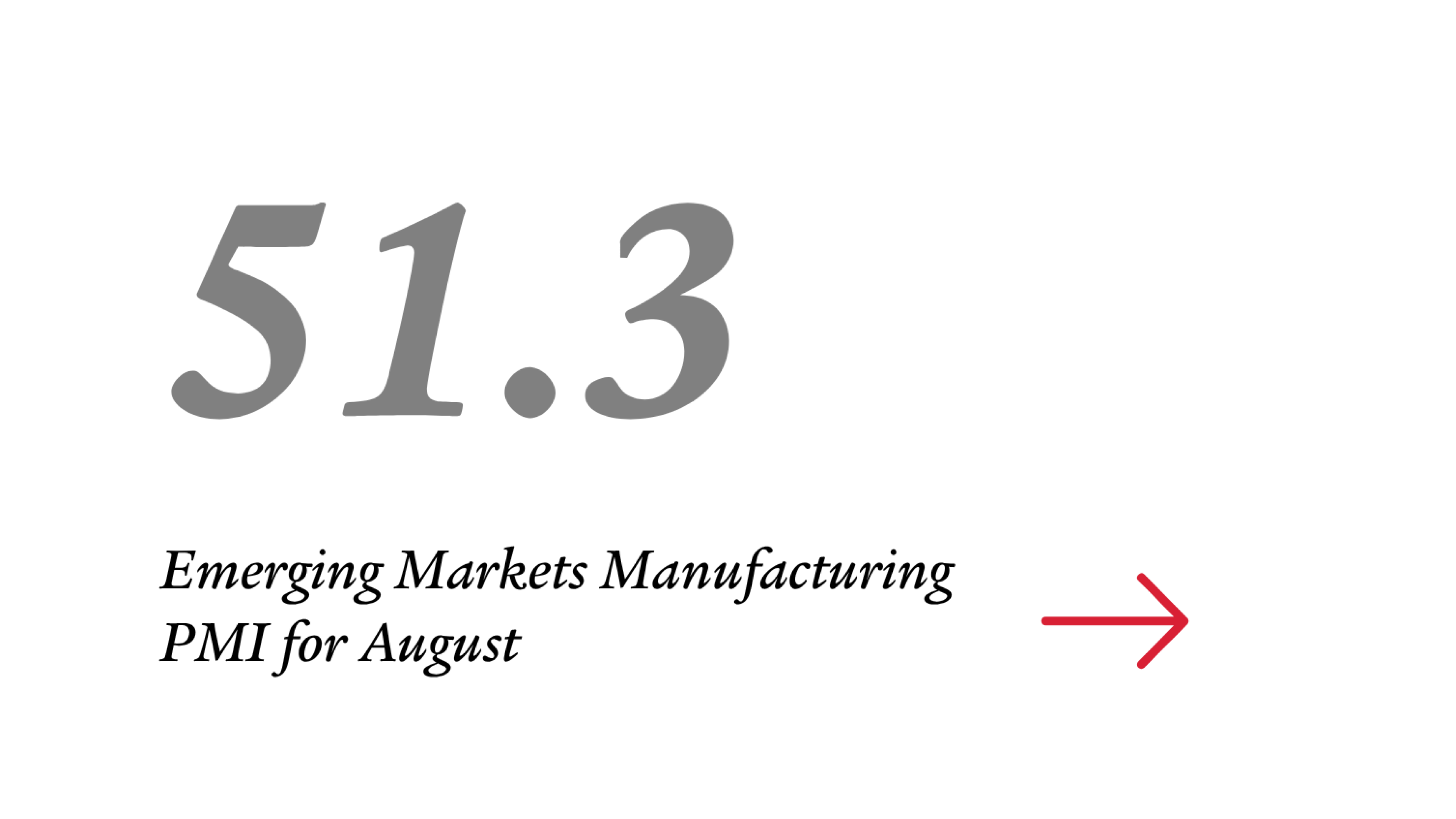
Emerging market manufacturing remained solid in August, with the aggregate PMI reaching 51.3 points. This momentum was notably driven by artificial intelligence and rising defence spending. In Asia, demand for AI-related equipment remains strong, while in emerging Europe, activity is also benefiting from AI and European rearmament. By contrast, the situation in Latin America is more mixed, particularly in Brazil, where the PMI remains below the expansion threshold due to the effects of restrictive monetary policy.